A Queer Look at The First Glass Beach Album
Written on October 16th, 2022 by Jacob Mayes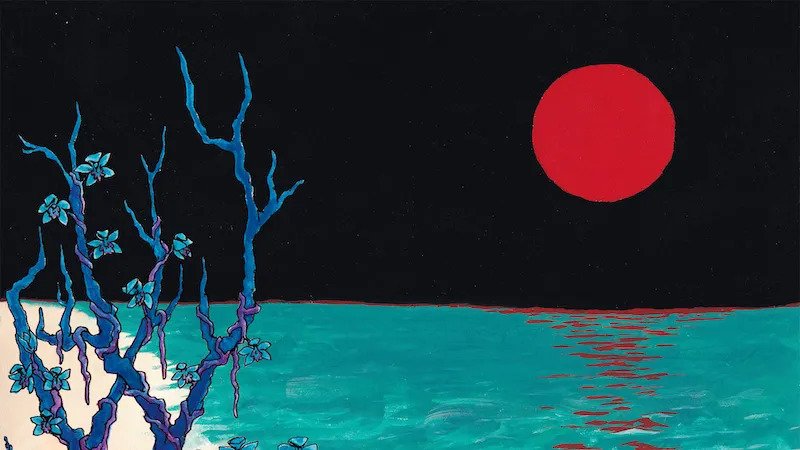
Bedroom Community and Compulsive Heteronormativity
Compulsory heterosexuality and the heteronormative structures in the western world discourage many from exploring their sexual and gender identity beyond the biological and socially accepted identities. This rejection of queer identities and sexual identities that go outside of the heteronormative leads to many issues within American Western culture, where compulsory heterosexuality and heteronormative structures dominate the social landscape. These issues are varied and difficult to number, as the psychological effects of suppressing one’s own desires and identity can be severe, often leading to self-harm and even suicide. This negative feedback because of having a gender identity that does not fall within the norms is becoming increasingly well-explored within popular culture. This is especially so in the case of music, which has had a connection to queer culture and ideologies for decades when considering the contributions of The Village People, Dolly Parton, and Lady Gaga. One recent example of a band that often explores queer themes and they themselves are queer are Glass Beach. Glass Beach is a 4-piece band who’s music is influenced by a plethora of genres such as pop-punk, jazz, and video game soundtracks that result in an amalgamation of sound that is difficult to categorize into one specific genre. Their first studio album released under Run For Cover Records, The First Glass Beach Album, is full of songs whose lyrics directly reference queer experiences, especially in the case of “Bedroom Community”.
Before analyzing the contents of these songs and their lyrics, it is important to understand the identities of the individuals that make up Glass Beach and especially the gender nonconforming front man and lead singer, J McClendon, also known as Classic J. McClendon, is a nonbinary individual whose identity plays heavily into the lyrics and messaging throughout their music. It is not only seen in Glass Beach’s discography, but they have also had music that deals with the same topics of queerness and opposition to queerness in their solo project titled Casio Dad. Additionally, the bassist and drummer, Layne and William, are also trans and in a tweet made by Classic J, he revealed that the band also utilizes a “trans artist for album [cover] and artwork,” (McClendon). McClendon chooses to surround themself around people who, like themself, are queer and has similar experiences, as seen by their choice of bandmates and collaborators on their musical endeavors. It is evident by McClendon’s continual effort to surround themselves with people much like J McClendon in their queerness, and by the choice of subject matter presented throughout numerous songs, one of their most important goals is to continually ensure that members of their community feel safe, represented, and validated. In the same tweet mentioned earlier in the paragraph, McClendon corroborates this claim saying, “We’re here so you can be too if it’s safe and right for you,” (McClendon) but if it is not safe or right for the trans or queer reader, that McClendon and the band recognize them all the same. Classic J, and Glass Beach by association, share the very same goal in making the world a safer and kinder place to those who suffer for their identity. This is evident not only in their statements made publicly, but also in their music.
The first song off The First Glass Beach Album that directly references and explores themes of queerness, gender performance, and the negative effects of compulsory heterosexuality, is “Bedroom Community”. The song follows the story of a young girl who is incredibly depressed and lives the majority of her life on the internet, staying in her room on account of the fact that her father holds onto traditional beliefs regarding sexuality and gender and she acts outside of the normal. Her depression eventually takes hold and results in her suicide. The song begins with a description of the girl, being a “heart of excitement / In the form of a girl who hates her life,” (Glass Beach 0:04-0:08) wasting her time on the floor and waiting for some answer as to why she feels the way she does. These first few lines give the listener the general idea that the girl is depressed and reclusive and that isolating herself goes against her “heart of excitement,” (Glass Beach 0:04). The following lines describe the girl’s father, who is a straight laced and conservative man whose main goal is to keep “Satan out of the walls of the suburbs,” (Glass Beach 0:38-0:41) and who believes he is doing his best to protect his daughter from acting outside of the compulsory heteronormativity described by Parker in the textbook, “How to Interpret Literature” as “people should be heterosexual or else something is wrong with them,” (Parker 215). This theme of compulsory heterosexuality harming whose true sexuality is being repressed will continue to permeate throughout the song. After this, the lyrics establish that what the girl’s father fears is already coming to pass and that “Satan is upstairs, watching over his daughter,” (Glass Beach 0:45-0:48) and as a result of the repression of her sexuality, the girl’s depression is a constant presence looming over her and is becoming increasingly difficult to handle and dangerous to her well-being. However, another interpretation of this line could be that she has already gone against his religious conservative views and began exploring her sexuality and gender identity. The totality of the song suggests that, while both ring true to the story, that the former is more accurate. This demonic figure representing her depression follows her constantly and is present for every action she takes, watching and waiting for her to slip in a moment of weakness. This moment of weakness would come in a moment of “trying to get her head on straight,” (Glass Beach 1:05) and comply with the oppressive demands of a heteronormative society and home-life, the girl cannot help but feel ridiculous at this attempt to put on a femininely gendered performance, falling back into the “arms of / Mephistopheles,” (Glass Beach 1:19). Mephistopheles being a demonic figure in Judeo-Christian beliefs and another name for Satan in some interpretations. Following this, the chorus rings out that “she will never leave her bedroom,” (Glass Beach 1:21). The meaning of her falling into the grasp of the devil and never being able to leave her room again that most follows with the rest of the song is that the girl took her own life following an attempt to follow the advice and demands of her traditionalist father. It is in this moment of realization that she took her own life that the listener is shown the full effects of being queer in a world of structures that push compulsory heterosexuality. The fifth verse follows, outlining what was said to the girl by her father and the reaction of the world to her suicide.
The fifth begins with what the father said to his daughter, the speaker of the song, who has also been observing the girl and all the events surrounding her life and death, quotes him directly, “you’ll never be okay, ‘kay if you don’t / come to your senses,” (Glass Beach 1:56-1:59) and that she overreacts to everything. In this moment of denying her the freedom to be herself and express herself how she feels in addition to invalidating her feelings of depression, it is being shown to the listener that these words are what the daughter was thinking about when she was attempting to put on a gender performance that is untrue to herself. The father continues to mock her depression, that it can “spread like a virus,” (Glass Beach 2:05) and that the girl caught it from “that stupid girl,” (Glass Beach 2:09). This is the first implication that the root cause of this pain and suffering at the hand of her father was due to him discovering something that happened with another girl. This can be interpreted as either the daughter had sexual and/or romantic feelings for another girl who struggled with a similar depression, or that the girl’s online friends encourage her to explore her identity and go against the wishes of her father. While there are likely other interpretations, those are the two that support the narrative, and both support the narrative equally well. Regardless, the father is continually pushing this idea that the girl’s depression comes from those she associates herself with and that she should just conform regardless of how she feels. Then, the song takes the perspective of the girl, saying that she felt alone and vulnerable, and that she believed her father when “he said that he loved / me,” (Glass Beach 2:20). This line in particular pushes the idea that when someone is compelled to fall into heteronormative behaviors when it is not what they desire, it is likely that the outcome will be pain and suffering. The public is then invoked by the speaker, who is bemoaning the fact that, her suicide will be looked at as if “it’s an inevitable tragedy,” (Glass Beach 2:30) and not a murder whose perpetrator is everyone who continually enforces the “naturalization of heterosexuality,” (Parker 214). The speaker goes as far as to say the pain was intentional, as the tragic suffering and death of a lonely child has the potential to bring monetary gain for those “flipping through a spiral notebook for some / sad hopeless words to turn into a liturgy,” (Glass Beach 2:39-2:45). This is of course a reference to the trend in media that often follows tragic deaths where the deceased and their story are turned into a revenue stream in the form of online articles, morose and regretful news coverage, and a wide variety of disrespectful tributes to they who pass on. It is then pointed out once again that “She’ll never leave her bedroom in this bedroom community,” (Glass Beach 2:46-2:53) to close out that section of the song. What follows is an extended instrumental culminating in McClendon singing out “No!” repeatedly to the rhythm of the song in almost a scream, crying out against the lack of accountability taken by those who are to blame for this poor girl’s death, joining her and saying that “we’ll never leave our bedrooms, / we’re a bedroom community,” (Glass Beach 4:32-4:44). By replacing the “she” with a “we”, the speaker and, based on their own life, the actual singer J McClendon, is establishing that they too have faced similar trials and that they are an ally to whoever else is suffering for their identity. The song ends with a repeat of the first four lines, with another self-hating girl who wastes away on the bedroom floor, showing that so long as queer people are compelled to fit into a heteronormative society, the suffering will continue.
“Bedroom Community” by Glass Beach is a song that examines and explores the ideas and experiences of queer people who live in a heteronormative society. J. McClendon and their own personal experience as a nonbinary person, along with those they surround themselves with, inform the lyrics and messaging within this song regarding how one feels when suppressing their own identity and true self. The messaging within the song, “Bedroom Community”, suggests that the only way to fully rid society of environment-caused queer depression and suicide is to abolish the compulsion of heteronormativity that infects much of the world.